AINA
(Artisans in Architecture)
Philosophy
Committed to habitat for the under-priviliged communities, artisans, and the environment
Continuing the legacy of Hunnarshala Foundation, our organisation – AINA – is committed to under-priviliged communities, artisans, and the environment in the fields of appropriate technologies, architecture, and construction. Our primary objectives revolve around creating inclusive habitats by providing housing, basic services, and infrastructure for marginalised communities in both urban and rural settings. During disasters, we support communities in helping them rebuild and restore their habitats and infrastructure.
Sustainable resource management is a core focus, promoting the conservation and sustainable use of natural resources in construction practices. Through education and training programmes, we empower individuals with the skills and knowledge necessary for sustainable development.
We prioritise technological innovation, researching and deploying cutting-edge solutions in building design, preservation, and environmental practices. Social, economic, and environmental research informs our strategies, enabling us to address the specific needs of communities. Our organisation actively works on policy development and advocacy to improve guidelines, programmes, and practices in the habitat development sphere. We are dedicated to enhancing work conditions and skills for artisans, supporting their professional growth and well-being.
Our comprehensive approach spans design and planning at all scales, from interiors and landscapes to urban and rural habitats and ecologies. We undertake diverse construction projects including buildings, infrastructure, landscapes, and restoration. In summary, our organisation is dedicated to sustainability, and innovation, striving for inclusive habitats, disaster recovery support, resource conservation, education and training, technological advancements, policy advocacy, artisan empowerment, and comprehensive design and construction initiatives.

Incubation
Artisana Centre for Habitat and Technologies
Artisana Centre for Habitat and Technologies Pvt. Ltd. extends AINA’s sustainable and environment-friendly construction to the masses. Artisana complements AINA’s mission through technology-based services and diverse project execution. The centre serves architects, developers, builders, and end users, delivering innovative solutions for public buildings, institutions, and hospitality sectors.
Artisana’s commitment to eco-friendly construction translates into practical applications, showcasing the viability of sustainable building techniques like rammed earth, compressed stabilized earth blocks (CSEB) for walls, shallow domes, vaults for roofing — by combining such methods with cutting-edge technologies, Artisana demonstrates that eco-friendly practices can be economically viable and aesthetically pleasing, bridging the gap between traditional methods and the growing demand for sustainable alternatives in mainstream construction.
Mentor
Sandeep Virmani
Sandeep Virmani is an Indian architect and development professional with over 25 years of experience working in the arid region of Kutch, Gujarat. He has founded and led several organisations focused on sustainable development, including Sahjeevan, Satvik, and Hunnarshala Foundation. Sandeep’s work spans water management, organic agriculture, renewable energy, and community empowerment. He has developed decentralised drinking water systems, revived pastoral animal husbandry, and demonstrated sustainable waste management models. Sandeep has also been involved in policy advocacy, disaster rehabilitation, and capacity building of local communities and institutions. He has received several awards, including the Anil Shah Gram Vikas Award and the Domestic Animals Biodiversity Conservation Award, in recognition of his contributions to rural development and environmental conservation.
Team
Abji Pal
Arvind Anthu
Arvind Verma
Bhavin Vaghadia
Chetana Varu
Deepak Chouhan
Gopal Bhuria
Gulal Bhavsar
Hari Vaghela
Heli Patel
Jamna Rathod
Karmashi Rangani
Kishan Bamniya
Nandini Pancholi
Ramesh Prajapati
Ramsingh Bamaniya
Sanjay Rathod
Shankar Deval
Vidhi Bhimani
Collaborators
FES
TRC – Tata Trust
SRMD
Aabhat
Talati & Partners
Sahyadri School
A. Mridul
Doro architects
Alembic
Build 3 eco ashram
Hive earth
Khamir
KMVS
Sahjeevan
HIC
Setu abhiyan
Fore Studio
Design Factory India
Bayhauz
Aagaur
Adhyay Collective
Dhammada
Alma mater
WWF
AAA
Dustudio
Seeds
PIC
Unnati
Mette Lange Architects
Lumanti
ACHR
MP Tourism Board
Hunnarshala
Square Inch
Massachusetts Institute of Technology
Wool Research Association
Central Wool Development Board
Clean Cooling Collaboratives
Cool Veg
JMA Designs
Lohabithi
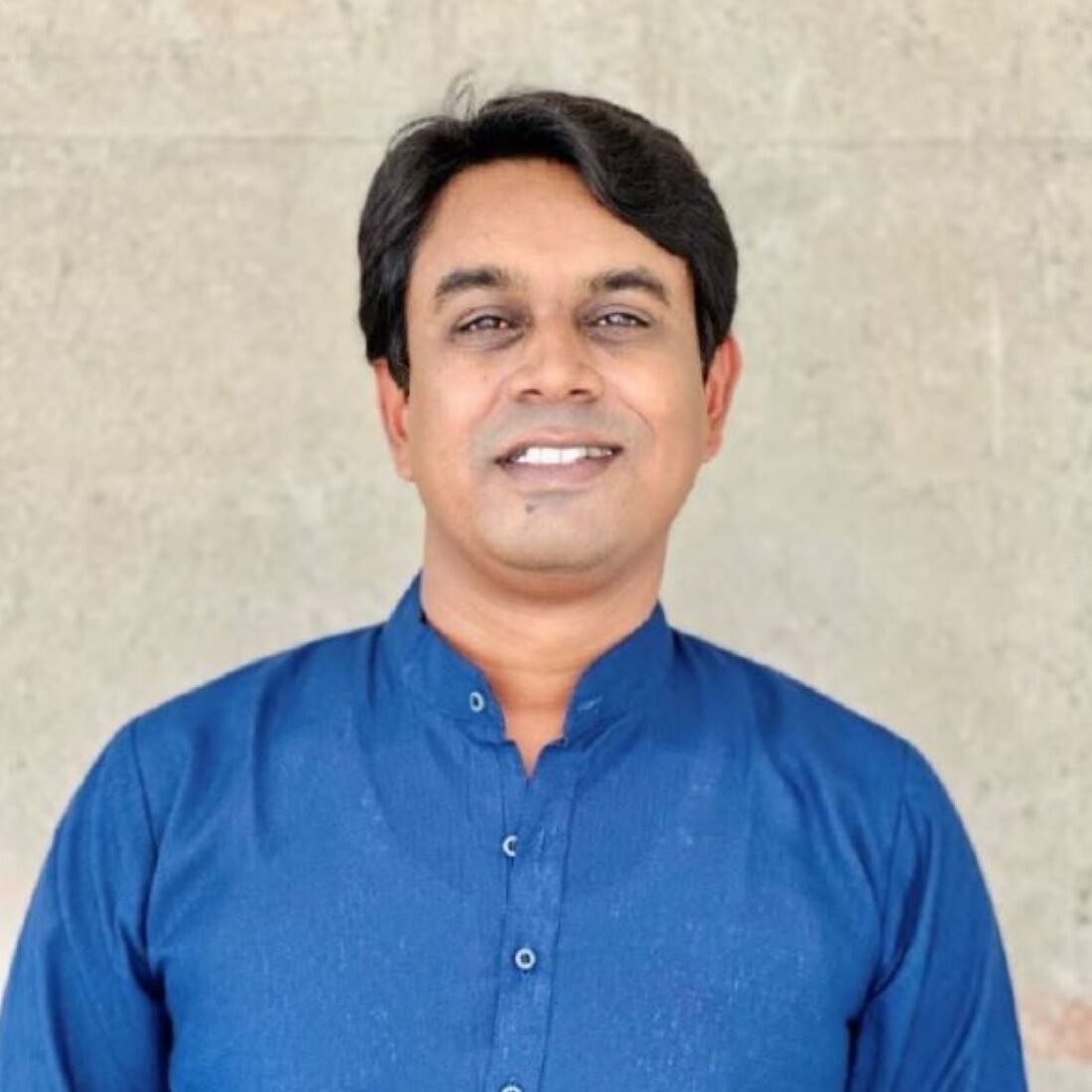
A civil engineer by training, Dharmesh Vikramsinh Jadeja has dedicated over 30 years to living and working in Auroville, India. His early interest in indigenous housing solutions inspired a search for simple, culturally appropriate designs using local resources. He is influenced by his interactions with Masters in art, architecture, and design. Dharmesh focuses on exploring sustainability and resolving design problems through local culture, communities, and resources. Through Dustudio, he collaborates with artisans and crafts people to re-establish handcrafted elements in contemporary spatial design. His work ranges from social housing and disaster rehabilitation to heritage conservation and more. Dharmesh’s diverse interests include writing, poetry, ceramics, and traditional crafts. He is actively involved with INTACH in Porbandar and divides his time between Dhrafa Studio and Auroville.
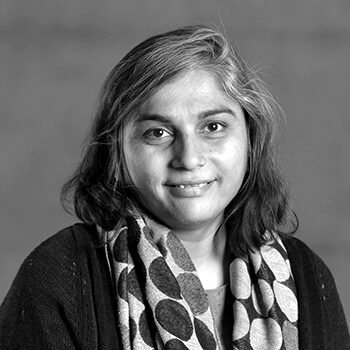
Dr. Jigna Desai is a professor of Architecture and Heritage Conservation at the Faculty of Architecture, CEPT University, Ahmedabad and is the Head of Center for Heritage Conservation, CEPT Research and Development Foundation. She is an expert member of the International Scientific Committee for Historic Cities and Towns and Villages at the International Council for Monuments and Sites (ICOMOS). She is a guest scholar (2024 – 25 cycle) at Getty Conservation Institute, Los Angeles and a visiting professor at Nottingham Trent University. Jigna is also the founding partner at a small award-winning architectural practice, JMA Design Collaborative, that is currently headed by Mehul Bhatt.
As a director of AINA, Jigna contributes towards strategic planning, vision building, and direction of organisation to achieve its objectives. As academician and institutional head, she brings new insights and prioritisation focusing on developmental issues.
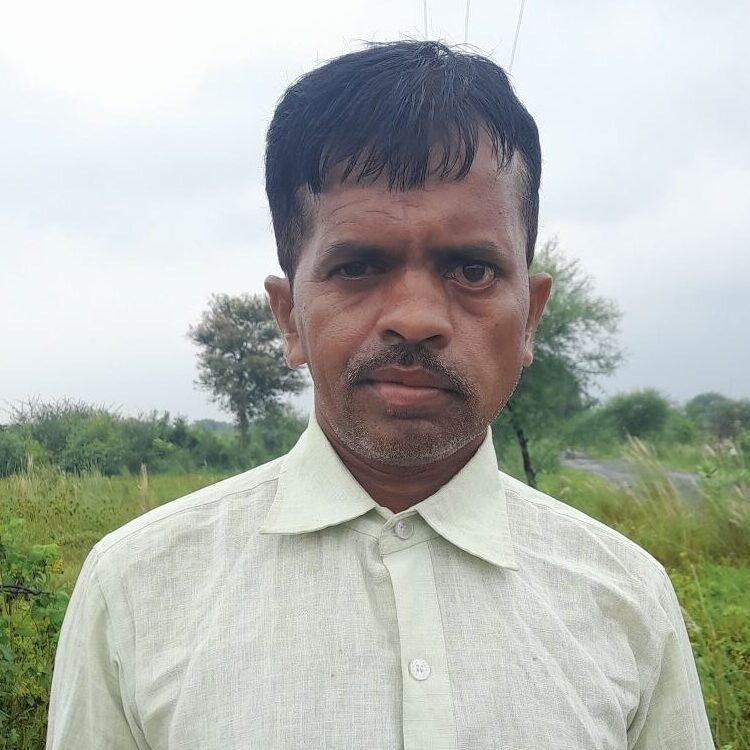
Mahavir Acharya is a highly experienced civil engineer with nearly four decades of expertise in construction and management. He co-founded Hunnarshala, dedicating 20 years to promoting sustainable architecture and empowering communities. As the Managing Director for the past five to six years, he oversees the organisation’s operations and strategic planning. Mahavir is also the founder and Managing Director of AINA, focusing on capacity building and research innovations. With a passion for working closely with communities and artisans, he integrates traditional knowledge into sustainable development projects. His leadership, research-driven approach, and commitment to community engagement have made him an influential figure in the field of sustainable architecture.
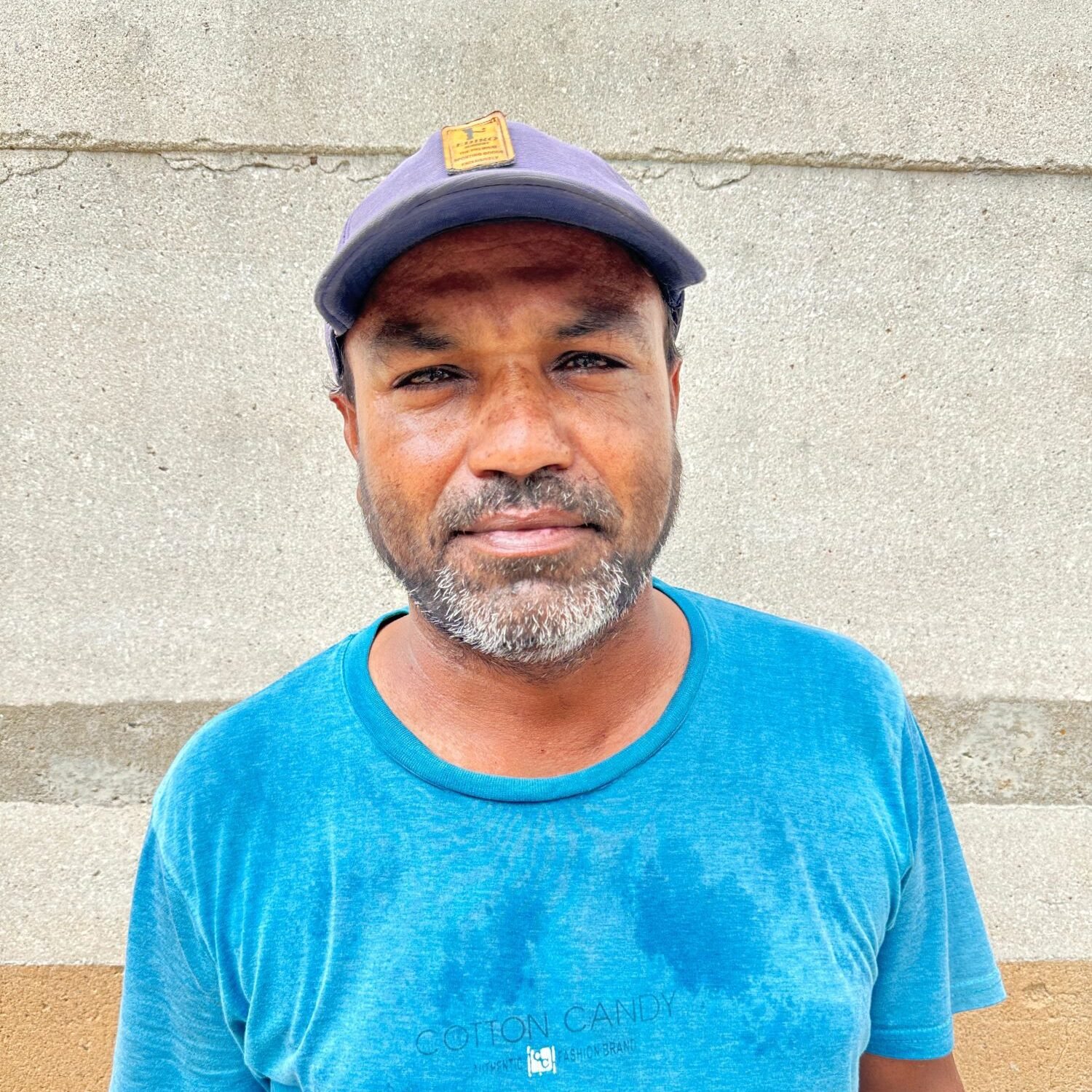
Rupesh Hurmade is a dedicated civil engineer with a career spanning over two decades. Since joining Hunnarshala in 2003, he has been instrumental in promoting alternative building technologies and empowering communities through his role as a founding member of AINA. Focusing on post-disaster projects and slum development, Rupesh’s expertise lies in project management and community-based initiatives. His core strength is executing urban housing projects and conducting mason training programs. As the Executive Director of AINA’s Community Empowerment Unit, Rupesh continues to make a significant impact on urban housing issues, championing an owner-driven approach to development.